.svg "LNI")






The Confidence Before the Fall
The brief was clear and the environment was known. The specification was tight - the label had to withstand UV exposure, temperature variation, and occasional chemical contact. Nothing unusual for industrial equipment.
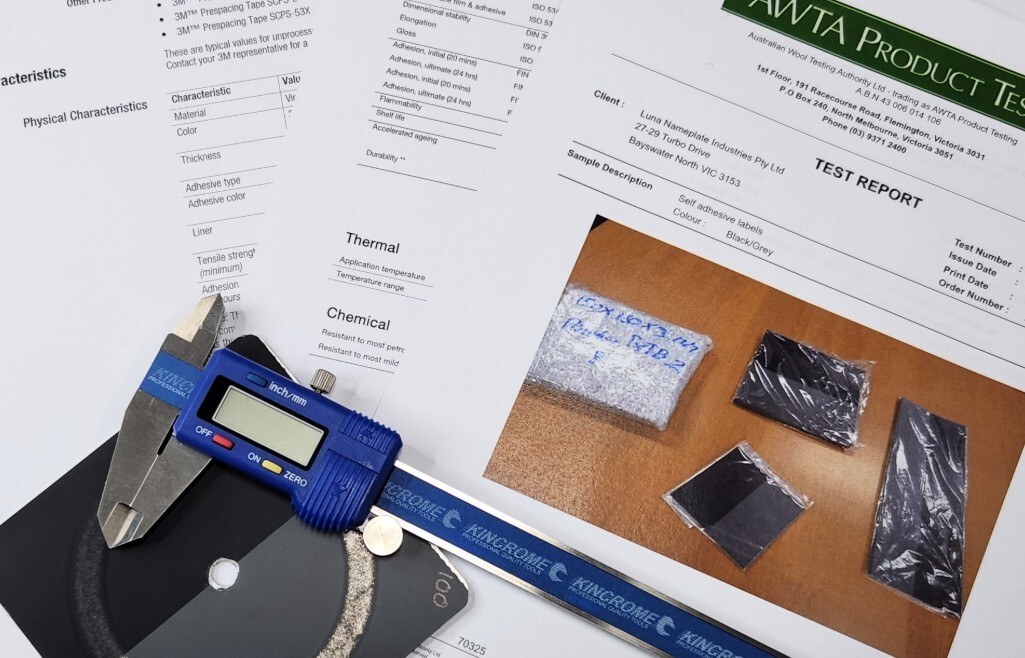
The supplier confirmed compliance, and the datasheet supported it. The internal team signed off. Boxes were ticked. Risk was considered managed. The labels went into production.
The first sign that something was off
At first, nothing looked wrong, then came the photos.
A unit in the field, still early in its lifecycle, didn’t look right. Some edges were beginning to lift, the print had dulled and some areas showed fine cracking.
Not catastrophic, not a full failure but enough to raise a question no one wanted to ask this early:
“How is this happening if it met the spec?”
The assumption that breaks things
The immediate instinct was to revisit the specification.
Check the ratings. Confirm the supplier. Validate the material selection.
Everything held up.
On paper, the label was exactly what had been requested. Which then led to a deeper, more uncomfortable realisation - the problem wasn’t that the label failed the spec. The problem was that the spec didn’t reflect reality.
What the spec didn’t capture
Specifications are designed to simplify decision-making. They isolate variables, they define thresholds and they create confidence. Though in doing so, they also remove context.
In the field, the label wasn’t exposed to:
- UV in isolation
- Chemicals in controlled doses
- Temperature changes in predictable cycles
It was exposed to all of them. At once. Repeatedly. Unevenly.
- UV combined with abrasion from dust and handling
- Cleaning chemicals were applied more aggressively than expected
- Heat cycling that expanded and contracted the substrate
- Micro-damage that compounded over time
None of these conditions were outside the spec.
But their combination was never truly tested.
The moment it clicks
This is where most teams shift their thinking. Specifications don’t guarantee performance.
They indicate capability under defined conditions. Real-world environments don’t operate under defined conditions; they operate under interaction, which changes everything.
Why does this happen so often?
Because specifications feel safe as they are documented. Comparable. Defensible.
They allow decisions to be made quickly and justified easily but they also create a subtle trap.
They encourage teams to believe that if each requirement is met individually, the outcome is secure. In complex environments, that logic breaks down as performance is not the sum of isolated capabilities. It is the result of how those capabilities hold up together over time.
What needs to change
The shift is not about abandoning specifications; it is about reframing their role.
From: “Does this meet the spec?”
To: “Does this survive the real conditions it will face?”
That question brings new considerations into play:
- What combinations of stress will the label experience?
- Where will wear occur?
- How will operators interact with the equipment?
- What happens after six months, not just initial exposure?
This is where better decisions begin to take shape.
Where LNI can help
At LNI, the focus is not just on meeting specification requirements; it’s on understanding how those requirements play out in real environments. That means:
- Looking beyond datasheets
- Mapping actual operating conditions
- Designing for interaction, not isolation
Because when labels are designed for reality, they don’t just pass tests, they perform over time.
One thing to remember - a specification tells you what a label can handle. Reality determines what it actually will.
LNI designs and manufactures high-quality metal nameplates, labels and badges right here in Australia. If you have a product branding issue that needs to be solved, contact the specialists at LNI today.